
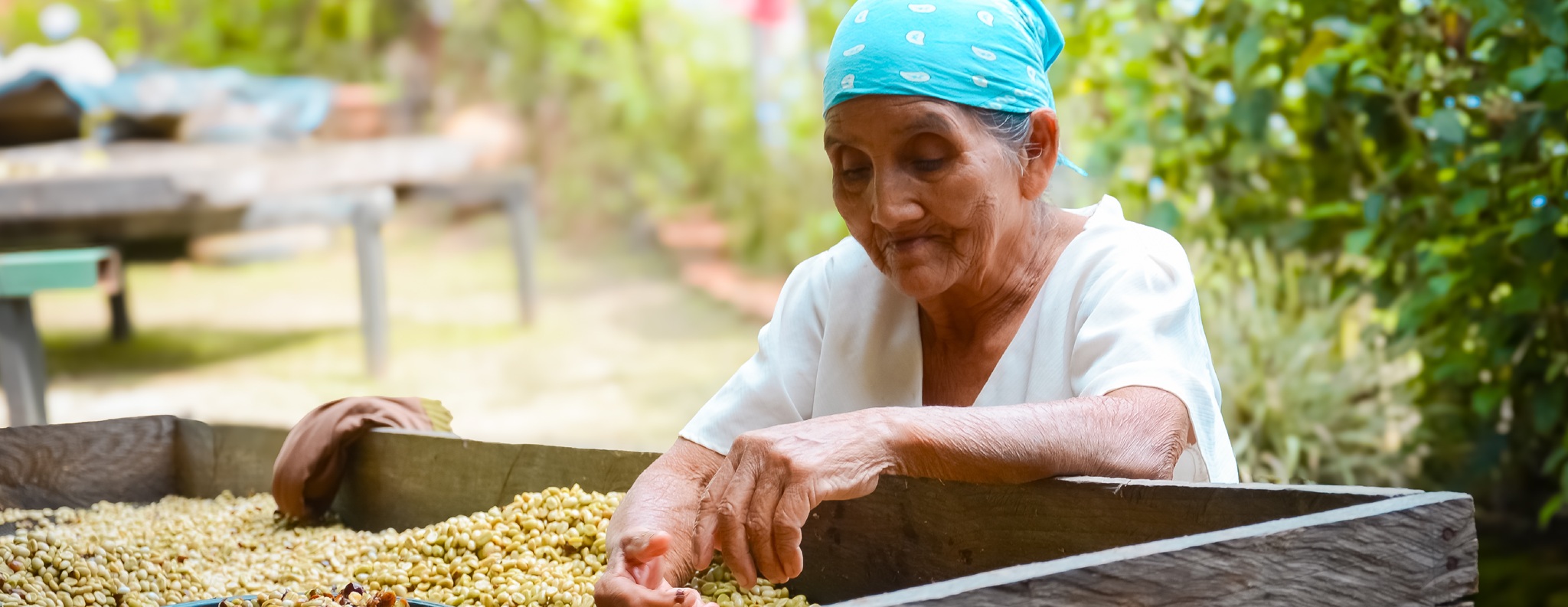
Women shaping coffee and leadership in Nicaragua
With our partner UCAWomen shaping coffee and leadership in NicaraguaWith our partner UCA
In 2026, the International Year of the Woman Farmer brings overdue attention to a reality that has shaped agrifood systems for generations: women are central to agriculture. Yet their access to land, finance and decision-making remains unequal.
In Central America’s coffee sector, women represent between 19% and 34% of producers.
Despite their contribution, leadership roles and financial autonomy are still unevenly distributed. Strengthening women’s participation is not only a matter of fairness. It is essential for resilient rural economies.
This is visible in northern Nicaragua, through our long-standing partner Unión de Cooperativas Agropecuarias San Juan del Río Coco R.L. (UCA SJRC), with whom we have worked since 2012.
Women in leadership, not by chance but by choice
Founded to improve the livelihoods of smallholder coffee producers, UCA now brings together around 480 members, 27% of whom are women — a meaningful presence in a traditionally male-dominated sector.
The cooperative has built access to speciality coffee markets and secured international certifications, allowing producers to obtain fairer and more stable prices.

By working collectively, members strengthen their bargaining power and invest in sustainable farming practices. UCA also provides financial services adapted to agricultural cycles: short-term loans for plantation management, medium-term financing for equipment such as coffee-pulping machines, and longer-term support for plantation renovation and small-scale processing infrastructure.
The cooperative’s transformation is closely linked to the leadership of Griselda Jarquín López, who has served as General Manager for more than two decades.
When she took on the role in 2002, UCA was close to collapse. Trust was fragile, resources scarce, and the idea of a woman leading a coffee cooperative was far from obvious.
“I took the challenge in 2002 — a journey filled with learning, doubts and many obstacles, especially in a male-dominated industry,” she recalls. “At first, I had no experience, just fears… but also dreams — mine and those of the producers who believed in rebuilding the cooperative.”
In a context where women in leadership were rare, her persistence helped to stabilise governance, restore trust and rebuild financial discipline. Membership grew from 60 to 480 producers.
“My biggest motivation has always been to improve our living standards — and we did it. I’m proud to see how both women and men have grown.”
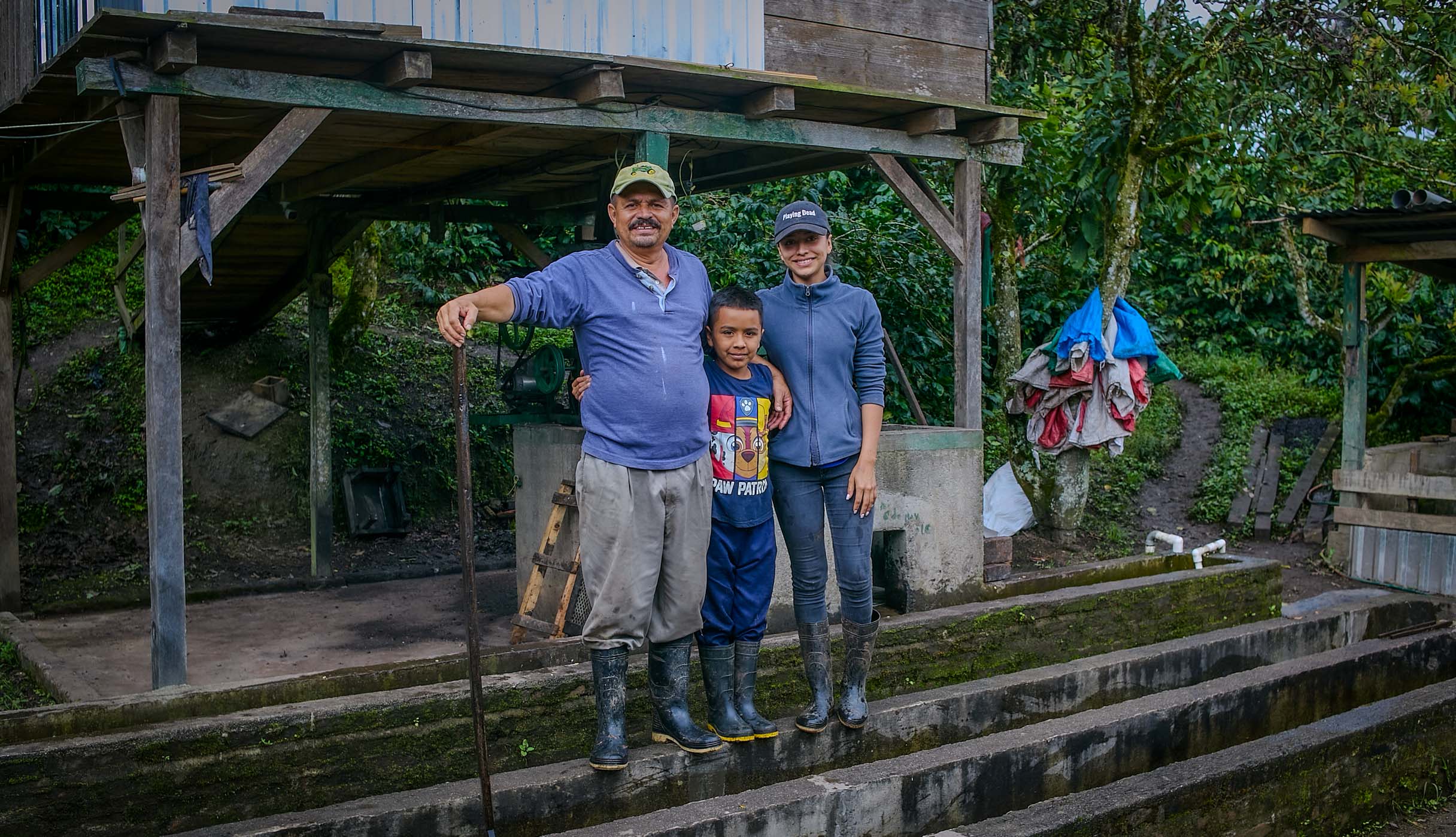
Today, women participate not only as producers but increasingly in governance and decision-making spaces within the cooperative. Those who once contributed informally are now visible members. Some manage their own plots and investments. Others take on leadership roles.
“When women have access to financing and leadership spaces, they gain economic independence,” Griselda explains. “They make better decisions — for their families, their farms and their communities.”
The cooperative also supports practical innovation.
In partnership with Ayuda en Acción, UCA recently provided solar dryers to 40 women producers. Traditional sun-drying methods expose coffee beans to unpredictable weather, affecting quality and price. Solar dryers allow greater control and consistency, improving coffee quality and access to premium markets.
These improvements may appear technical, yet they contribute directly to income stability and long-term resilience.

From global commitment to human yield
Our partnership with UCA illustrates something we have learned over time: empowerment does not come from isolated interventions. It grows when organisations have sustained access to markets, finance, and leadership opportunities.
This understanding informs our gender-lens investing.
We support organisations that widen women’s participation — not only as producers, but as members, leaders and decision-makers. Inclusion is not an add-on. It shapes how we select and accompany our partners over the long term.
In this International Year of the Woman Farmer, recognition must translate into responsibility.
Supporting women farmers means strengthening the conditions that allow their leadership and decisions to shape the agrifood systems on which we all depend.
When women participate fully, entire communities become stronger.
That is what long-term cooperative finance makes possible.
That is human yield.
Related articles
When Women Lead, Communities Thrive
How Bailyk Finance is transforming lives in Kyrgyzstan with support from Alterfin
Continue readingAlterfin and Gender Equality
Women make up 80% of the workforce processing and adding value across our partners' agricultural chains. Here's how our investment strategy accounts for that.
Continue readingGender-lens investing: more inclusion for more impact
Caterina Giordano, Chief Impact Officer, on why Alterfin added gender-related criteria to how it assesses partners.
Continue readingTestimonialS

FAQ title
FAQ description

more news from alterfin

DIDN't find what you're looking for?
Read our FAQs or contact us.


